
How to Choose a Chikungunya Test Kit for Molecular Diagnostic Laboratories
A request for chikungunya testing can raise a second analytical question: whether dengue and Zika RNA also need examination. A Multiplex PCR Test for Zika, Dengue & Chikungunya places those targets within a shared reaction design. Its value depends on the additional findings required by the laboratory, rather than simply the number of viruses named. The choice rests on both the questions the panel answers and the specimens through which those answers can be obtained.
Read the Specimen List Against Each Virus
Specimen eligibility belongs to each individual target claim, even when several viral targets share a reaction tube. A matrix contains its own mixture of biological material and potential interference, so support for one virus in that matrix cannot establish the same application for another. The target and specimen must be assessed together before the panel is assigned.
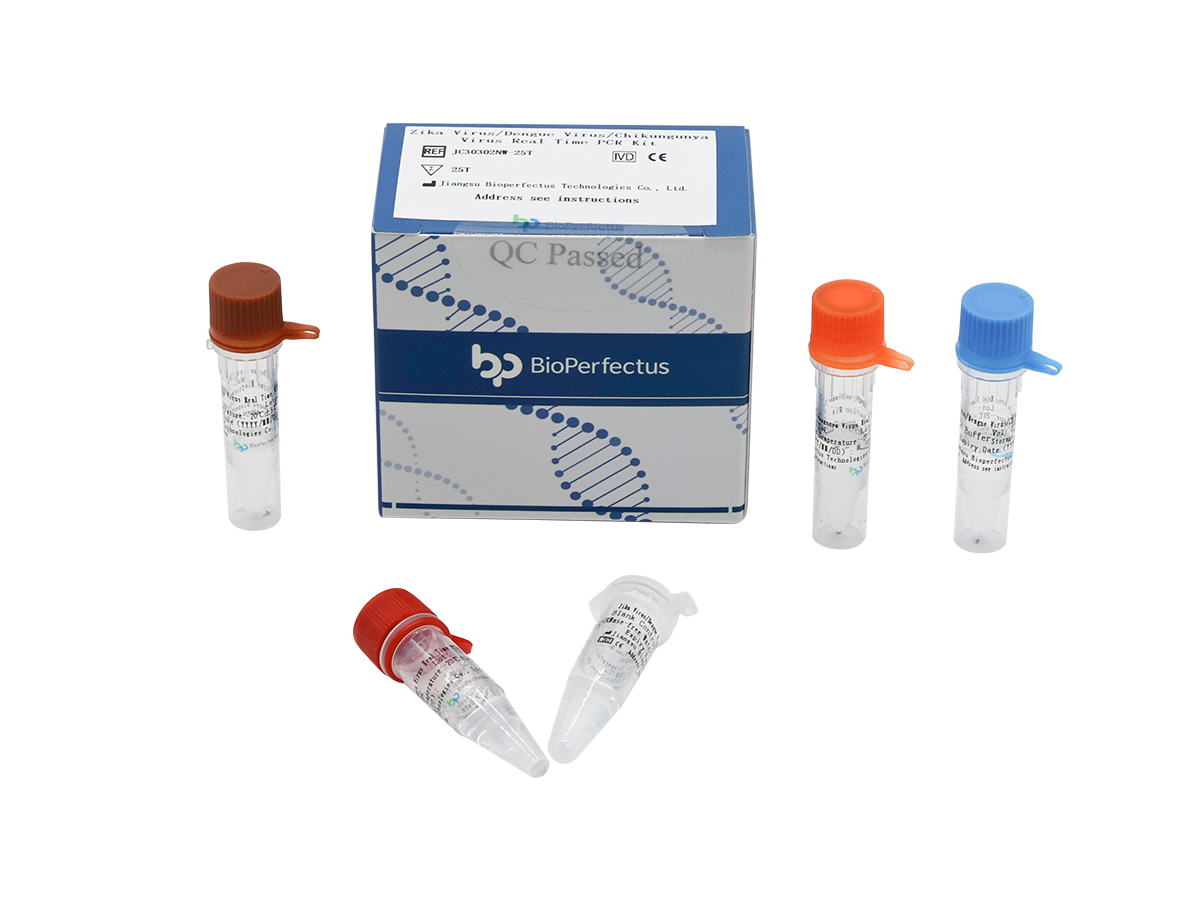
Shared and target-specific specimen routes coexist in the BioPerfectus Zika Virus / Dengue Virus / Chikungunya Virus Real-Time PCR Kit, which qualitatively detects RNA from the three named viruses. Human serum, EDTA whole blood and cerebrospinal fluid are specified for all three targets. Urine and amniotic fluid have a different qualification: they are included specifically for Zika virus RNA detection.
For a chikungunya test kit assessment, that distinction narrows the relevant specimen choices to those supported for chikungunya. The two Zika-specific materials cannot complete an otherwise unsupported chikungunya route. A laboratory can compare its actual submissions with the shared specimen list, then determine whether the intended three-target investigation has an appropriate starting material.
Decide What the Additional Targets Contribute
Multiplex detection adds target distinctions to an examination of a single specimen. A laboratory considering a chikungunya test kit can ask whether its assignment also requires dengue and Zika RNA findings. Including those targets changes the information sought from the reaction, without changing the number of independent specimens represented by the material entering it.
The molecular basis is sequence recognition. Primers and detection chemistry distinguish the intended target sequences during amplification; for RNA viruses, reverse transcription first provides material that PCR can amplify.
In a Multiplex PCR Test for Zika, Dengue & Chikungunya, the assay’s interpretation scheme assigns observations to the included viruses instead of treating every fluorescent response as one undifferentiated viral finding. Distinguishable detection signals are necessary because amplification of several targets in one vessel would otherwise obscure which target generated the measured response.
A panel can return several findings with limited detail. It does not automatically quantify viral RNA or investigate pathogens outside its target list. An additional target is useful where its finding answers an assigned laboratory question, while further clinical interpretation still depends on the relevant evidence beyond the reaction itself. Panel breadth therefore needs a purpose.
Examine the Reaction Beyond Its Target Count
The triplex configuration connects the requested viral findings to a defined RNA assay, with preparation supplying the template that enters the reaction. Nucleic acid purification and reverse transcription perform different chemical jobs: purification separates material from the original matrix, while reverse transcription produces complementary DNA for amplification.
Residual interference can affect the receiving chemistry even when extraction has recovered nucleic acids. Suitable preparation has to support the receiving assay rather than merely recover a measurable liquid volume.
The BioPerfectus triplex uses a 5 µL input and specifies a detection limit of five copies per reaction. The input denotes the aliquot supplied to testing; the detection limit describes an analytical claim for that assay. Neither number alone describes target recovery from the collected specimen, and their meanings remain separate when the laboratory examines its preparation procedure.
An internal control accompanies the assay, providing process evidence alongside the viral observations. Its acceptance and any response to an unexpected finding follow the applicable interpretation rules. Reviewing target and control observations together prevents an unresolved procedure from being treated as an ordinary negative result. The accepted molecular finding remains evidence about the specified RNA targets.
Give the Panel a Defined Place on the Testing Menu
Implementation connects panel coverage with the examinations the laboratory actually offers. The intended instrument must support the reaction and detection configuration, while preparation must deliver the required template from an accepted specimen. These are distinct technical assessments: an available PCR instrument does not establish that every proposed extraction procedure produces suitable input for that assay.
The practical review of a Multiplex PCR Test for Zika, Dengue & Chikungunya can therefore examine representative material under the proposed operating conditions. Expected target observations and applicable controls give that assessment a defined endpoint. Any change in preparation or instrument configuration can be evaluated at the affected operation, without presuming that an unchanged panel name proves an unchanged procedure.
The specimen qualifications of the BioPerfectus assay also shape which requests can enter the same service. Shared specimens support the three-virus examination, whereas Zika-specific specimen routes retain their narrower purpose. Organizing the menu around those actual claims establishes which requested findings the laboratory is equipped to produce through each supported procedure.
A chikungunya test kit can consequently be selected as part of a broader viral RNA examination where the additional targets are required. Panel coverage supplies the analytical questions; specimen eligibility supplies the material through which they can be investigated. Suitability lies where the required target combination meets the accepted specimen and an established laboratory procedure.