The Booth Dimensions Behind Every Comfortable Happy-Hour Seat
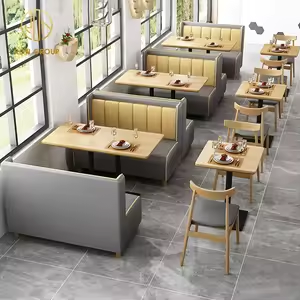
The best seat in the house during happy hour is rarely the one with the view. It is the booth in the corner, the one people slide into without thinking, the one they stay in long after the wings are gone and the second round has arrived. Comfort like that is not luck. It is a measurement.
Most operators choose booths by upholstery color and silhouette, then wonder why guests fidget after twenty minutes or why a four-top feels cramped with three. The answer almost always traces back to numbers that nobody checked. A booth that fits the body keeps people seated, relaxed, and ordering. Here is the dimensional logic behind a seat that earns its keep, and the booth dimensions are worth verifying before any units ship.
Seat Height Sets the Whole Tone
Seat height is where comfort begins, and the industry has settled on roughly 18 inches from the floor to the top of the cushion. That figure is not arbitrary. It lets the average adult plant both feet flat without dangling or folding the knees up toward the chest.
Drop 16 inches below, and guests sink into a low, lounge-like posture that feels casual but makes standing up a small ordeal. Push past 19, and shorter guests lose foot contact, killing the relaxed sprawl that happy hour depends on. The sweet spot holds the body in a position it can keep for an hour without complaint.
The Table Wants to Sit at 30 Inches
A dining table top almost always stands 30 inches off the floor, and the relationship between that surface and the 18-inch seat is what makes a booth usable. The gap leaves room for thighs to clear the apron and for a drink to reach the lips without a hunch.
Get this pairing wrong and the symptoms show up fast. Too tall, and guests reach up awkwardly for their glasses. Too short, and the table presses into the lap. The 30-inch table over an 18-inch seat gives about a foot of working clearance, which is the unspoken standard that lets people eat, talk, and gesture freely.
Seat Depth Decides Whether People Lean Back
Depth is the dimension most buyers ignore, and it quietly determines posture. A seat 16 to 18 inches deep supports the thighs while still letting the spine meet the backrest. That contact is what makes a booth feel like a place to settle rather than a place to perch, and it tracks the body measurements that the study of anthropometry maps across the population.
Go deeper than 18 inches and the cushion edge catches the calves, forcing guests to scoot forward and lose the backrest entirely. The result is a booth that looks generous and feels punishing. For happy-hour crowds who linger, depth in the right range is the difference between one drink and three.
Seatbacks Do More Than Hold You Up
Backrest height shapes both comfort and the feel of the room. Single-sided booths against a wall usually run 36 to 48 inches tall, while back-to-back booths climb to 48 inches or more so each side gets its own pocket of privacy. Taller backs muffle conversation and give a table the sense of a small room within the room.
For casual happy-hour spots, backs in the 42- to 48-inch range strike the right balance. High enough to define the space, low enough to keep the floor open and the sightlines friendly. A bartender should still be able to scan the room over the tops.
Clearance Keeps the Service Moving
Comfort is not only about the seat. It is about the space around it. The walking room between booths and across the floor decides whether a server can deliver a tray of cocktails without a detour and whether guests feel boxed in. A few clearances matter most:
- Main aisles: about 48 inches, so two people, or a server with a full tray, can pass without turning sideways.
- Secondary aisles: roughly 36 inches where foot traffic is lighter and service is occasional.
- Seat-to-table gap: 16 to 18 inches between the seatback and the table edge so guests slide in cleanly.
- ADA tabletop range: dining surfaces from 28 to 34 inches high with knee clearance underneath for accessible seating.
Skimp on aisles and the room feels tight, no matter how plush the cushions are. The federal ADA standards set the floor for accessible tables and clear floor space, and treating those minimums as the starting point keeps the room both legal and comfortable. Spacing is part of the seating experience, even when guests never consciously notice it.
Where Body and Furniture Finally Agree
The reason a great booth disappears beneath you is that every dimension was chosen to match the body rather than the showroom. Eighteen inches of seat height, a 30-inch table, depth that supports the thigh, a back that reaches the shoulders, and aisles that let the room breathe. None of it announces itself. All of it adds up to a guest who stays.
For a happy-hour operator, that quiet comfort converts directly into time at the table and rounds on the check. The dimensions are not glamorous, and they will never make a menu or a marketing photo. Yet they are the foundation under every seat people fight over at five o’clock, and getting them right is the cheapest upgrade a room can make.