
Adapting Custom Outdoor Lighting to Retail, Office, and Residential Spaces
Outdoor lighting has to respond to more than darkness. Building materials, weather exposure, pedestrian activity, architectural character, and operating schedules all influence how an installation should be designed.
Well-planned custom light fixtures allow these factors to shape the lighting arrangement rather than forcing different environments into the same standard layout. Across retail, office, and residential projects, the most effective solutions balance visual identity with practical requirements, from safe circulation to manageable maintenance.
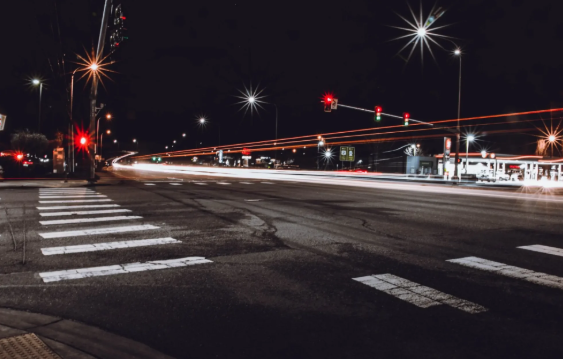
Matching Fixture Design to Different Outdoor Environments
Retail exteriors often use lighting to make entrances, storefronts, and display windows more noticeable after sunset. The illumination should draw attention to important architectural features without creating distracting glare for pedestrians or drivers. Wall-mounted fixtures, concealed linear accents, and illuminated signage can work together, provided their brightness and color appearance remain visually coordinated.
Office buildings have a different set of priorities. Outdoor lighting around entrances, walkways, parking areas, and building façades needs to support navigation while maintaining a professional appearance. Uniformity is particularly important along pedestrian routes, where abrupt dark patches can make movement uncomfortable. Lighting near glass façades also requires careful positioning to limit reflections and unwanted light entering interior workspaces.
Residential applications tend to place greater emphasis on comfort and atmosphere. Garden paths, balconies, terraces, driveways, and exterior walls each call for different beam distributions and illumination levels. A narrow beam may highlight a tree or textured wall, while broader light distribution is more suitable for general movement around an entrance. The fixture’s appearance should also complement the building’s exterior materials rather than compete with them.
Evaluating Materials and Environmental Protection
Outdoor fixtures face conditions that indoor products rarely encounter. Rain, humidity, dust, ultraviolet radiation, temperature changes, and airborne pollutants can affect both the housing and the electrical components. The level of protection required depends on the installation location. A sheltered balcony, for example, has different exposure conditions from an open garden path or a façade facing heavy rainfall.
Ingress Protection ratings provide a useful way to compare resistance to dust and water. However, an IP rating should not be treated as a universal measure of outdoor durability. Material quality, sealing construction, cable entries, connectors, and installation methods also influence long-term performance. Product documentation should identify the conditions under which the stated rating applies.
Customizing Light Distribution and Fixture Configuration
Outdoor projects rarely share identical dimensions or mounting conditions. A narrow façade, a curved canopy, and a long garden boundary may all require different fixture lengths, connection arrangements, or optical effects. Custom light fixtures can address these differences through adjustments to dimensions, mounting methods, housing finishes, and light distribution. Such customization should begin with drawings and site measurements rather than relying solely on visual references.
Light output should be assessed in relation to the surface and task being illuminated. A high lumen value does not automatically produce a comfortable result; beam angle, mounting height, spacing, and surface reflectance all affect the final appearance. Designers should also consider color temperature and color rendering, particularly around retail displays, landscaped areas, and building entrances where material colors remain visible at night.
For linear accents and architectural details, best customizable LED strip lights can provide adaptable illumination along edges, recesses, canopies, and other building features. LEDIA Lighting’s COB Digital Series offers optional CRI levels of 80+, 90+, and 95+, along with a three-year warranty. Its available specifications include different protection options, allowing project teams to assess suitability according to the intended installation environment and product documentation.
Reviewing OEM Capabilities Before Project Approval
The quality of a customized fixture depends partly on how effectively the OEM supplier translates project requirements into a manufacturable design. Before production begins, technical discussions should cover dimensions, electrical input, power requirements, optical performance, environmental protection, and installation details. Clear specifications reduce the risk of misunderstandings between designers, contractors, and manufacturers.
Sampling is another important stage. A prototype allows project teams to evaluate actual brightness, color consistency, surface finish, mounting compatibility, and connection details. For larger installations, sample approval should also establish acceptable tolerances and clarify whether production units will follow the same configuration. Any changes made after approval need to be documented and reviewed before mass production.
Quality control should extend beyond a final visual inspection. Relevant checks may include electrical safety, light output, thermal behavior, aging performance, and electromagnetic compatibility, depending on the product type and applicable standards. Buyers should request supporting test records and verify certification scope at the product level rather than assuming that every model carries the same approvals.
Best customizable LED strip lights also require careful consideration of installation and maintenance arrangements. Cutting positions, connection methods, driver access, and maximum run lengths should be confirmed before site work begins. A supplier with responsive technical support can help resolve questions about these details, while clear packaging labels and installation instructions make coordination easier for contractors working across multiple project locations.
Conclusion
Outdoor lighting works best when its design reflects the specific character and operating conditions of each site. Retail spaces may call for visual emphasis, offices require practical circulation lighting, and residential settings often benefit from softer architectural accents. Across all three, material selection, optical performance, environmental protection, and installation planning deserve equal attention.
As an OEM manufacturer, LEDIA Lighting provides LED lighting products and customization support for different project requirements. Its manufacturing, R&D, quality-control, and customer-support capabilities offer useful points for buyers to evaluate during supplier selection. With clearly defined specifications and appropriate product testing, custom light fixtures can serve both the functional needs and architectural identity of outdoor spaces, while best customizable LED strip lights remain a flexible option for carefully planned linear applications.